
AI Along Your Value Streams: A Practical Map
A structured way to see where AI fits across your enterprise, how far to take it at each step and what the evidence actually supports.

Sebastian Bitter
20.7.2026
Most companies ask where to start with AI. The answer begins with the value stream rather than a catalogue of tools. Four maturity levels run through the series: classical, assistive, agentic and autonomous. Across them the human role shifts from doing the work to steering it while the value stream itself transforms. Ten end-to-end value streams cover almost the whole enterprise. They are the core value chain, the planning that steers it and the functions that support it. Every stream is recorded against the same dimensions. Every real-world case gets its source verified and its limits stated, because a number that holds in one company often fails in the next.
Start with value streams, not with tools
When leaders ask how to use AI, the question usually arrives as a tool question, meaning which assistant, which platform, which vendor. That framing skips the more useful step, because the place to start is the work itself. What is meant is the chain of activities that turns an input into a result a customer values. This chain is a value stream.
A value stream runs end to end, so Procure-to-Pay runs from a purchase requirement to a paid invoice and Issue-to-Resolution runs from a customer raising a problem to that problem being solved. Once the stream is explicit, the question changes from "which tool" to "which step and how far should AI take it". That is a question you can answer with evidence. The examples in this series are kept deliberately simple. Real value streams are usually far more complex, with many more steps, systems and hand-offs. Mapping them is what makes that complexity workable, which is why the whole stream is always taken end to end. Value reaches the customer only when the whole chain delivers, so a faster single step helps nobody if the work then waits at the next hand-off. Looking at the whole stream therefore means looking hard at the hand-offs between steps, because automating one step on its own often just moves the bottleneck along. Looking at the whole stream is what makes it possible to judge whether a change really shortens delivery or only looks impressive in one place.
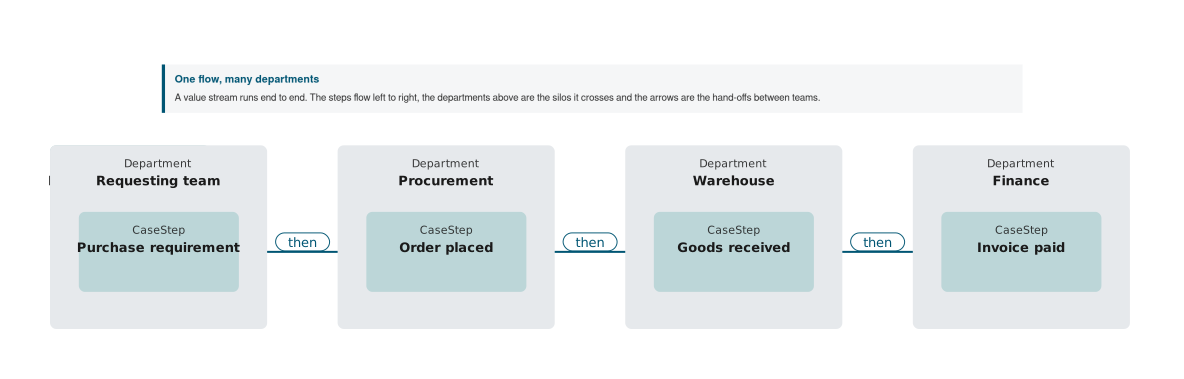
Figure 1: A value stream runs end to end. The example Procure-to-Pay runs from a purchase requirement to a paid invoice.
Four levels of AI maturity
For each step the series distinguishes four levels of how deeply AI is involved, four levels that form the backbone of everything that follows.
Classical: people do the work by hand. AI is not involved.
Assistive: a person does the work and AI suggests. The human keeps every decision.
Agentic: AI performs a bounded step on its own, and a human reviews and approves the result before it counts.
Autonomous: AI runs the step without case-by-case approval. A human monitors the system and sets the guardrails.
The pattern across the levels matters more than any single level, because with each one the human role moves further from doing the work towards specifying, reviewing and governing it. The human keeps control, only now at the gate rather than at the task. Each step up trades more of the routine work for more control and integration effort. For a business case that trade matters more than the label on the level.
For most organisations, especially cautious or regulated ones, the realistic target is agentic with a human gate. The AI does the bounded work and a person still approves it before it counts. Full autonomy stays rare and situational.
Each step up has its own price of entry and asks for groundwork in data, connections and controls long before the AI takes anything over. Moving from classical to assistive is mostly a matter of access. It takes digitized processes and data, a capable AI model plus people trained to use its output and to judge it. Moving to agentic asks for a foundation. That means solid data in integrated systems or a data warehouse, API access so the AI can act rather than only suggest plus a bounded process with a clear success criterion and a review gate. Moving to autonomous is the highest bar. It asks for reliable IT infrastructure with monitoring, a mature and largely automated process plus strong data governance and guardrails with a human fallback. The infrastructure builds up and carries forward, while the control points are added level by level. The concrete threshold still depends on the stream, so the maturity view marks what each step up requires. The real cases then show what an organisation actually had in place before it moved.
A second price is easy to miss, because deeper integration asks for more and more of your own knowledge inside the model before the AI becomes useful in your company. Proprietary data and context become part of the cost, alongside the licence fees. How much that matters depends on how you run the model. On public consumer tools your inputs can feed the provider's training, while providers promise the opposite for their interfaces. OpenAI states that data sent to its API has not been used to train or improve its models since March 2023 unless a customer opts in. Zero data retention and a private or on-premise deployment go further still. For a regulated organisation that containment choice belongs in the plan from the start, right next to the value case.
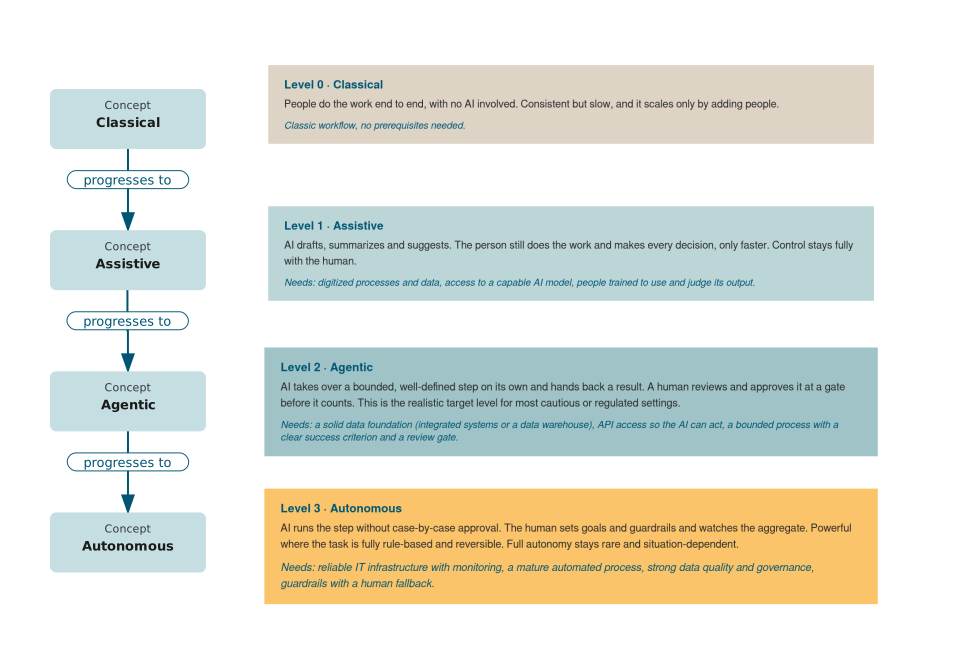
Figure 2: The four maturity levels from classical to autonomous, with what each step up requires shown on the level cards. The human role moves from doing the work to steering it.
Ten value streams: a map of the enterprise
An enterprise can be described with ten value streams, which together cover almost every part of a company.
They fall into three groups, where the core value chain creates and delivers the product, the planning steers it and the supporting functions keep it running. The table below names each stream and what it does.
Value stream | What it does | Role |
Idea-to-Market | Develops new products and services, from first idea to market launch. | Core |
Procure-to-Pay | Buys what the company needs, from purchase requirement to paid invoice. | Core |
Plan-to-Produce | Plans and makes the product, from production plan to finished goods. | Core |
Quote-to-Contract | Turns a sales opportunity into a signed deal, from quote to contract. | Core |
Order-to-Cash | Delivers to the customer and collects payment, from order to cash received. | Core |
Sales and Operations Planning | Balances demand and supply across the chain and steers the core streams. | Steering |
Issue-to-Resolution | Handles customer issues and incidents, from report to resolution. | Supporting |
Hire-to-Retire | Manages people, from hiring through employment to exit. | Supporting |
Record-to-Report | Runs finance and accounting, from recording transactions to financial reports. | Supporting |
Acquire-to-Retire | Manages IT and physical assets, from acquisition through use to retirement. | Supporting |
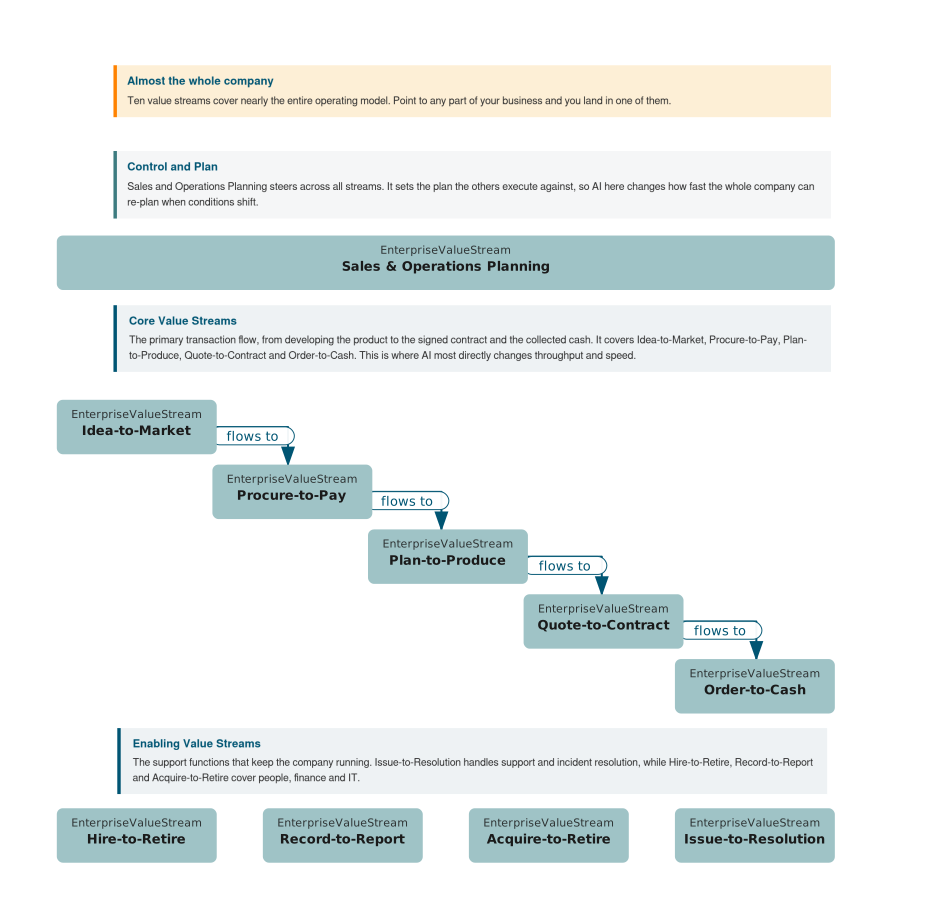
Figure 3: Ten value streams, grouped into core value chain, steering and supporting functions.
This map turns the series into a directory, because a company can point to any part of its operating model and read there how AI changes it.
How we break down each stream
Every stream in the series is described the same way, a consistency that is deliberate because it lets you compare one stream against another and trust that the same questions were asked. Two sets of dimensions do the work.
The first set of dimensions describes the structure of the stream and lays out, for each of the four maturity levels, the steps in the flow and how they change. You can see which steps merge, which shift and which appear. On top of that sits a profile of the whole stream. It names its primary goal, the typical performance indicators, the prerequisites for the agentic and autonomous levels and how the work splits between people and AI. A short assessment of strengths, weaknesses, opportunities and threats rounds it out.
Idea-to-Market is a worked example, because the figure below lays the stream out across the four levels and makes the merging and shifting of steps visible at each one.
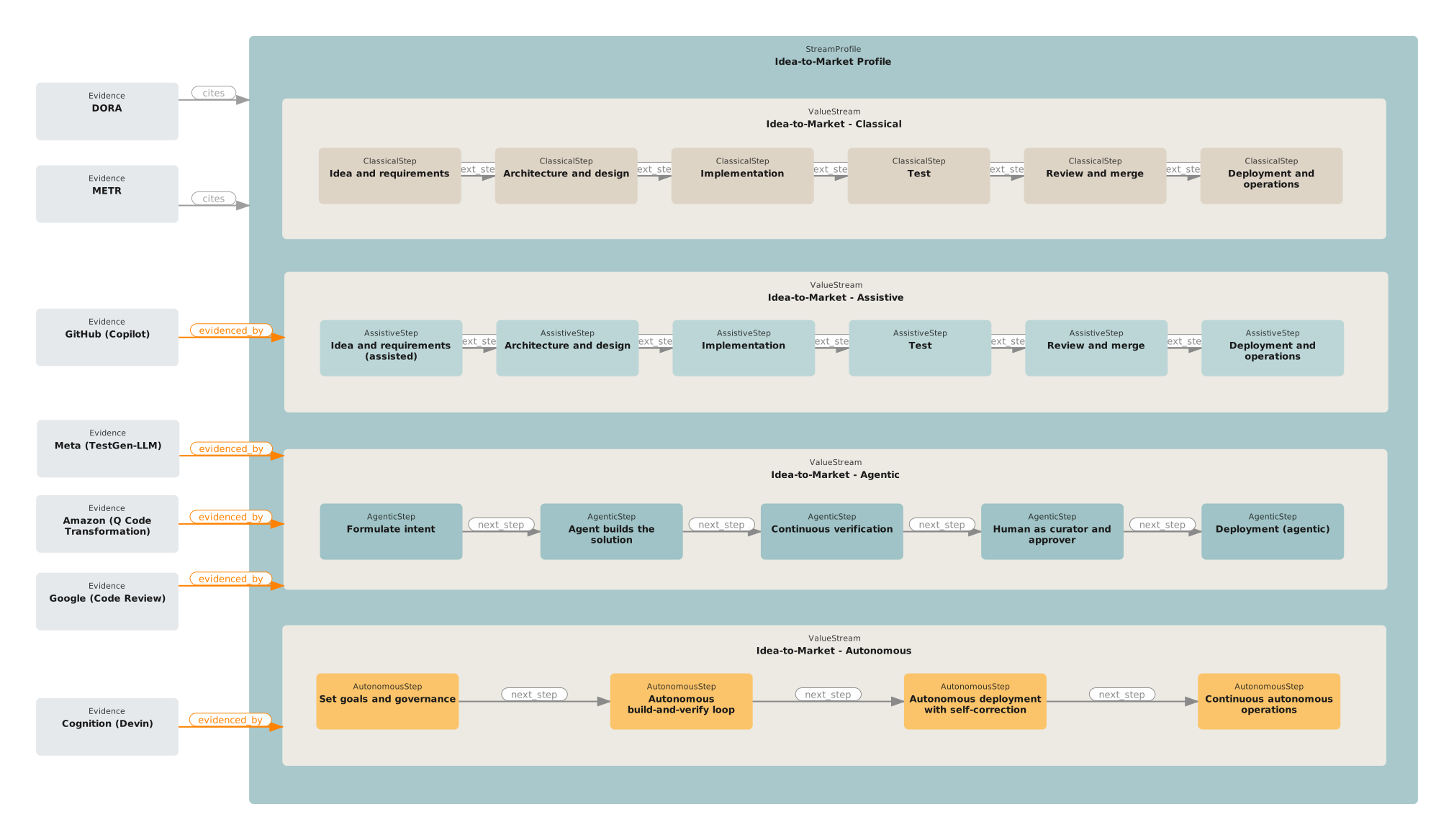
Figure 4: One value stream worked out: Idea-to-Market across the four maturity levels, showing how the steps change as AI takes on more.
The second set of dimensions describes each real-world case, where every example carries the same fields and stays comparable with every other case in the series. Those are the reported metric, the point where a human reviews or approves, the control gates, how much the result depends on context, the risks and lessons and the source. Only cases that could be verified against a credible source are included. Every case carries a reality-check. It says where the number does not transfer and what breaks outside ideal conditions.
A growing case study library
A framework is only worth as much as the evidence behind it, so the evidence stays in plain sight. As the series works through the streams, the real cases add up into a library that sits behind every post. Every case is recorded the same way. It gives a quick picture of how the AI sits inside the work, what it changed, the number that was reported and, just as important, the point where that number stops holding.
Think of the map below as the table of contents, where each case sits under its value stream and the collection grows with every post in the series.
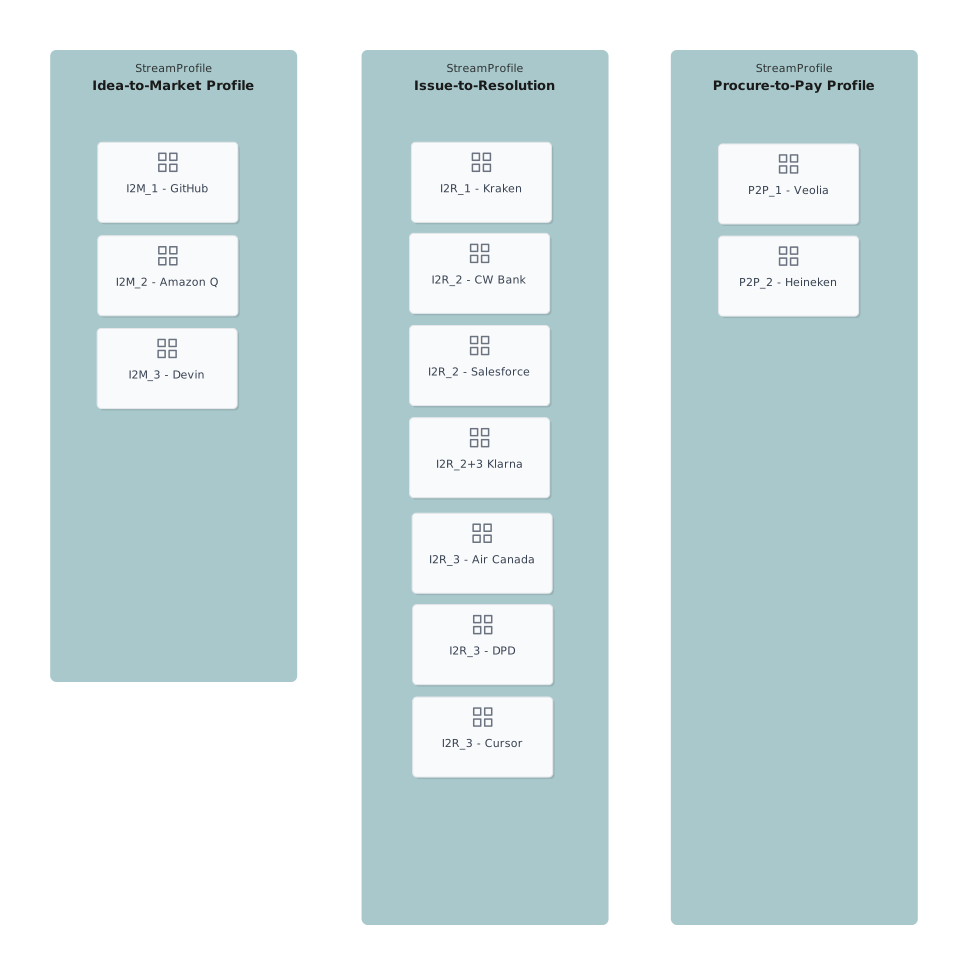
Figure 5: The case library as a table of contents, grouped by value stream, with cross-cutting studies kept separate. It grows with every post in the series.
Take Amazon Q Code Transformation, behind whose tile sits one case, laid out the way all of them are. It names the claim, the human who signs it off, the limit and the source it rests on, so the case can be checked.
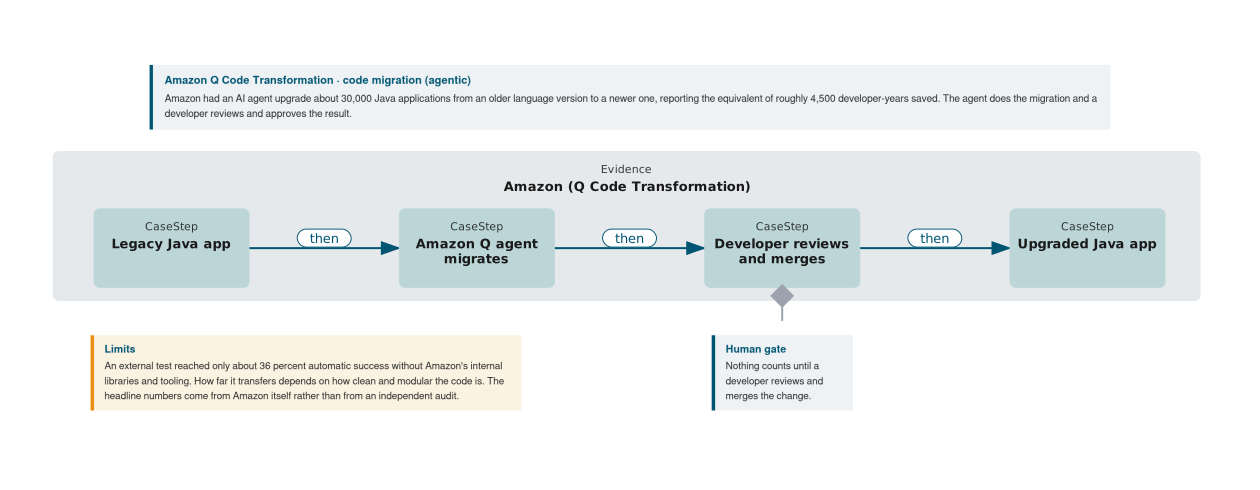
Figure 6: An example of how we record a single case (Amazon Q), with the reported metric, the human gate, the honest limit and the source. This is the format behind every case in the series.
New cases are added over time, each tied to the level of AI integration it shows and each with its positive and negative sides. Together they build a comprehensive picture and give real examples of what AI could mean for your own company, while keeping one thing in view. Not every company and not every industry can absorb an entry at full risk.
What comes next
The rest of the series takes the streams one at a time, with each post walking a single value stream through the four levels and showing the real cases with their limits. So you can see how far AI can go in that stream, from a careful first step to a fully agentic setup. Next up is Idea-to-Market.
Services
Resources
All Rights Reserved.