
Strategy Mapping: The Missing Link Between Ambition and Execution
Why 70–90% of strategies fail to deliver and how structured strategy mapping closes the gap between vision and execution.

Burcu Bayram
18.6.2026
Organizations worldwide spend more than $60 billion annually on strategic planning — yet 70–90% of strategies fail to achieve their intended outcomes. The root cause, as McKinsey, Bain and HBR consistently find, is not bad ideas but coordination failure: the invisible gap between what leadership intends and what teams actually do. This article introduces the Transentis Strategy Mapping framework: a 9-construct model built on the combined strengths of the Business Motivation Model, OKRs and the ArchiMate Strategy Layer. The framework organizes strategy into three layers — Direction, Execution and Enablement — and makes every connection traceable in both directions.
Explore the Strategy Model Template directly in Metapad
What is Strategy — and How Do You Turn It into Action?
Strategy is the art of making choices. It answers three fundamental questions every organization must face: Where do we want to go? How do we get there? And what do we need to make it happen? In theory, strategy is well understood — frameworks like the Balanced Scorecard, OKRs and the Business Motivation Model have been around for decades. In practice, however, strategy often remains what McKinsey calls "a document" rather than a living system.
The numbers are striking. Organizations worldwide spend more than $60 billion annually on strategic planning and leadership development — yet McKinsey, Bain, and Harvard Business Review converge on a sobering truth: roughly 70–90% of strategies fail to achieve their intended outcomes. A McKinsey Global Survey on strategy implementation found that only 27% of executives believe their organizations are good at translating strategy into action. A Bain & Company study showed that nearly two-thirds of companies struggle to coordinate across business units once execution begins. And HBR reported that coordination failures — not funding or technology — are now the number one reason transformation initiatives stall.
What is striking about these findings is their diagnosis. Strategies do not fail because the ideas are wrong. They fail because the connection between ambition and daily action breaks down — what researchers call a coordination failure. People are busy, priorities clash, and commitments get lost in translation between leadership and teams.
That is exactly the gap strategy mapping can close. Not by adding more planning, but by making the connections between vision, goals, strategies, capabilities and actions explicit and navigable for everyone in the organization — turning strategy into a shared knowledge graph that the entire organization can read, navigate and act on.
At Transentis, we asked ourselves: what would a strategy framework look like that is rigorous enough to be meaningful, but practical enough to actually be used? To answer that question, we went back to the foundations — three established frameworks that each approach strategy from a different angle.
Three Frameworks — Three Perspectives on Strategy
Rather than starting from scratch, we looked at what already exists and what each framework contributes. The goal was not to pick one, but to understand the strengths and gaps of each — and build something better from the combination.
Business Motivation Model (BMM)
The Business Motivation Model, published by the Object Management Group, is the most complete and formally structured of the three. Its central insight is the distinction between Ends — what the organization wants to achieve — and Means — how it intends to get there. Ends are Vision, Goals and Objectives. Means are Mission, Strategy and Tactic.
What makes BMM particularly valuable is its explicit treatment of context: Influencers (internal and external forces like strengths, weaknesses, opportunities, threats and regulations) are first-class concepts in the model. This makes BMM the most comprehensive framework for capturing why a strategy exists and what it is responding to.
The gap: BMM has no concept of organizational capabilities — it tells you what to do but not whether you have the ability to do it. And its formal structure can feel heavy for teams that just want to align on priorities.
OKRs (Objectives & Key Results)
OKRs, popularized by Intel and Google, bring a fundamentally different strength: measurability and rhythm. Where BMM defines an Objective as a goal with a deadline, OKRs are much stricter — a Key Result must have a baseline, a target, and a current value. Without those three numbers, it is not a Key Result, it is a wish.
OKRs also introduce the concept of Initiatives — the concrete actions that teams execute to move their Key Results. This creates a direct, traceable connection between daily work and strategic goals that most other frameworks lack. It is precisely this connection that addresses the coordination failures identified by McKinsey and Bain — when every initiative is explicitly linked to a measurable result and a strategic goal, alignment becomes visible rather than assumed.
The gap: OKRs are excellent at measurement but provide very little structural guidance on how goals relate to strategy, or what capabilities are needed to execute.
ArchiMate Strategy Layer
ArchiMate, developed by The Open Group, approaches strategy from an enterprise architecture perspective. Its Strategy Layer introduces two concepts that neither BMM nor OKRs address: Capabilities (what the organization must be able to do) and Value Streams (the end-to-end flows that deliver value to customers or stakeholders).
The Capability construct is particularly powerful. It bridges the gap between strategic intent and organizational reality — a strategy is only as good as the capabilities available to execute it. Value Streams add another dimension: they connect strategy to the customer journey, ensuring that strategic work is always anchored in the value it creates.
The gap: ArchiMate treats Strategy and Tactic as a single concept — "Course of Action" — which loses important precision. The distinction matters in practice: a Strategy defines the fundamental direction and lives for months or years ("Build a customer-centric digital platform"), while a Tactic is a concrete, time-bound initiative that implements it ("Launch unified customer portal by Q2 2026"). Merging them makes it harder to update the model when circumstances change. As for ArchiMate's notation being technical: that is a fair observation, and one worth engaging with honestly. Metapad is also a structured, model-based tool — but its strength lies in making that structure accessible and navigable for non-architects through intuitive visual layouts, AI-assisted modeling and interactive views rather than formal notation.
Design Decisions: What We Included — and What We Left Out
Building our strategy framework meant deciding what to take, what to combine, what to simplify, and what to leave out entirely. Every decision was a deliberate trade-off between completeness and usability. The result is a framework that borrows the best from each source — without inheriting their complexity.
What we included — and why
Vision and Mission form the stable foundation everything else depends on. Without them, Strategic Goals float without context — you cannot tell whether a goal is the right goal.
Strategic Goal and Objective are kept as two separate constructs — one of the most important structural decisions in the model. The Strategic Goal captures the qualitative ambition ("Improve Customer Satisfaction"). The Objective makes it concrete and measurable ("Increase NPS from 32 to 55 by Q4 2026"). This separation is present in both BMM and OKRs but they use different names. We chose "Strategic Goal" and "Objective" as the clearest combination.
Strategy and Tactic are kept as two distinct constructs, unlike ArchiMate which merges them. A Strategy lives for years and sets direction, a Tactic lives for weeks or months and delivers results.
Capability was added from ArchiMate because it answers the question most strategy frameworks quietly skip: do we actually have what it takes to execute this strategy? By making Capability an explicit construct — connected to both Strategy and Tactic — the model forces the question every strategy review should ask.
Influencer is a single flexible construct that covers everything from SWOT dimensions to regulatory pressures, using a
attribute rather than creating separate constructs for each dimension. This keeps the framework lean while capturing the full strategic context.type
Value Stream was added as an optional bridging construct between the strategy level and the process level — connecting strategy to the end-to-end customer flows it seeks to improve, and preventing the silo thinking that Bain identifies as one of the core coordination failures in strategy execution.
A note on Principles: frameworks like ArchiMate and BMM (via Business Policy) include the concept of guiding principles — fundamental commitments that shape how an organization acts, such as "act environmentally friendly" or "we are a diverse company." These are worth considering as a future extension of the model, particularly for organizations where cultural or ethical principles play a strong role in strategic decision-making.
What we left out — and why
Stakeholder did not become its own construct. Stakeholders behave like influencers in a strategy context — they affect goals and strategies just like threats or regulations. The
attribute on the Influencer construct captures the same information without adding redundancy.type: stakeholder
KPI / Metric was not added as a separate construct. The Objective construct already carries baseline, target and current value as attributes. A separate KPI construct would have added complexity without adding clarity.
Resource from ArchiMate sits one level below Capability in the abstraction hierarchy. Knowing that "Data Analytics" is a required capability is enough for strategy work — which specific people or systems sit behind it belongs to an operational model.
Business Policy, Potential Reward, Risk and Assessment from BMM were excluded. Risk and Assessment are covered through the Influencer construct. Business Policy belongs to a more specialized compliance or governance template — worth building, but out of scope for a general-purpose strategy framework.
The final result is a strategy framework with 9 constructs and 17 relationships.
Construct | Example | Core Meaning | BMM | OKR | ArchiMate | Same Meaning? | Wording Decision | In Template? |
Vision | "Leading sustainable urban mobility provider in Europe by 2030" | Long-term aspirational image of the future | Vision | — | Vision | ✅ Identical | "Vision" — all frameworks agree | ✅ |
Mission | "We make shared mobility simple, affordable and climate-friendly" | Purpose and reason for existence | Mission | — | — | ✅ Identical where present | "Mission" — only fitting term | ✅ |
Strategic Goal | "Improve Customer Satisfaction" | Mid-term, qualitative goal without a number | Goal | Objective | — | ⚠️ BMM qualitative, OKR implies measurability | "Strategic Goal" — prevents confusion with Objective | ✅ |
Objective | "Increase NPS from 32 to 55 by Q4 2026" | Specific, measurable, time-bound result | Objective | Key Result | — | ⚠️ BMM has deadline only, OKR requires baseline + target + metric | "Objective" — more formal than "Key Result" | ✅ |
Strategy | "Customer Experience Excellence" | Fundamental approach to reach a Strategic Goal | Strategy | — | Course of Action (high-level) | ⚠️ ArchiMate combines Strategy & Tactic | "Strategy" — more intuitive than "Course of Action" | ✅ |
Tactic | "Implement 24/7 Live Chat Support" | Concrete initiative that implements a Strategy | Tactic | Initiative | Course of Action (detailed) | ⚠️ OKR "Initiative" more agile, BMM "Tactic" classically strategic | "Tactic" — classically strategic from BMM | ✅ |
Capability | "Data Analytics", "Digital Customer Service" | Organizational ability that enables a Strategy | — | — | Capability | ✅ Identical | "Capability" — directly from ArchiMate | ✅ |
Influencer | "Increasing urban mobility regulation" (type: regulation) | Internal or external factor affecting goals and strategies | Influencer | — | — | ✅ Directly from BMM | "Influencer" — covers Assessment, Risk, Stakeholder via attribute
| ✅ |
Value Stream | "From Booking to Return" | End-to-end flow that delivers value to customers | — | — | Value Stream | ✅ Directly from ArchiMate | "Value Stream" — optional bridging concept to process level | ✅ |
Assessment | "Strength: Strong brand recognition" | Evaluation of an influencer (SWOT) | Assessment | — | — | — | Not a construct — covered in Influencer via
| ❌ |
Business Policy | "All solutions must be GDPR-compliant" | Guideline that constrains strategies | Business Policy | — | — | — | Not a construct — worth its own template | ❌ |
Resource | "Data Science Team", "Marketing budget" | Concrete resource behind a Capability | — | — | Resource | — | Not a construct — covered in Capability | ❌ |
Stakeholder | "Board of Directors", "End customers" | Interest group with expectations | — | — | Stakeholder | — | Not a construct — covered in Influencer via
| ❌ |
Potential Reward | "Market share gain through first-mover advantage" | Possible benefit of a strategy | Potential Reward | — | — | — | Not a construct — covered in Objective | ❌ |
Risk | "Technological change overtakes our strategy" | Possible risk of a strategy | Risk | — | — | — | Not a construct — covered in Influencer via
| ❌ |
KPI / Metric | "NPS: Baseline 32, Target 55, Current 41" | Concrete metric with baseline & target | — | — | — | — | Not a construct — covered in Objective via attributes | ❌ |
The Model
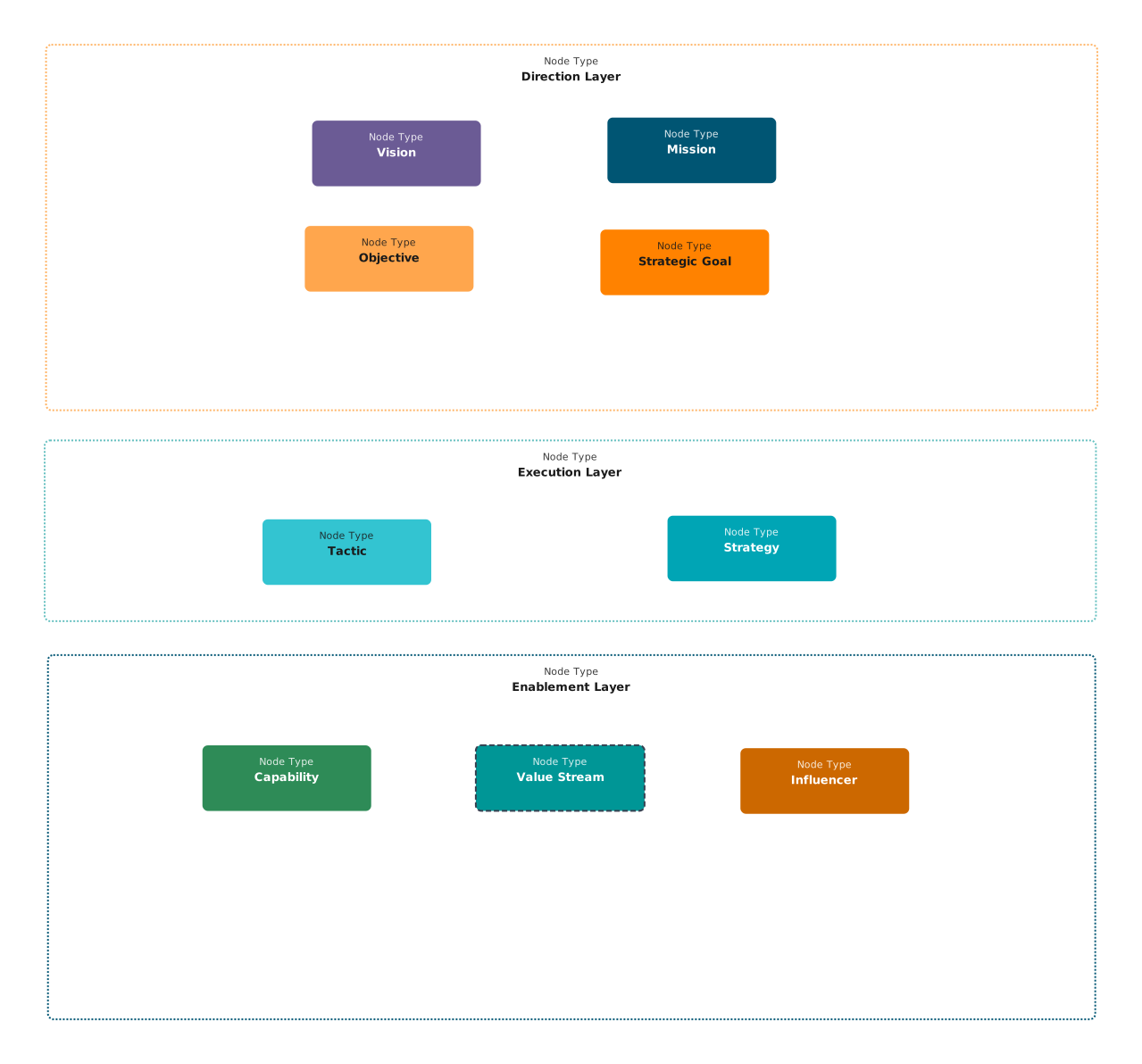
The 9 constructs are organized into three layers that reflect how strategy actually works — from ambition to action to enablement.
The Direction Layer contains Vision, Mission, Strategic Goal and Objective. These are the most stable elements — a Vision rarely changes, Goals are reviewed annually, Objectives quarterly. Everything in the model must be traceable back to this layer.
The Execution Layer contains Strategy and Tactic. Strategies set the fundamental course of action. Tactics translate them into concrete initiatives with clear owners and timelines.
The Enablement Layer contains Capability, Influencer and Value Stream. This layer answers the question every strategy needs to face honestly: what do we need in order to execute? Capabilities define the organizational abilities required. Influencers capture the forces that shape strategic choices. Value Stream connects strategy to the customer flows it seeks to improve.
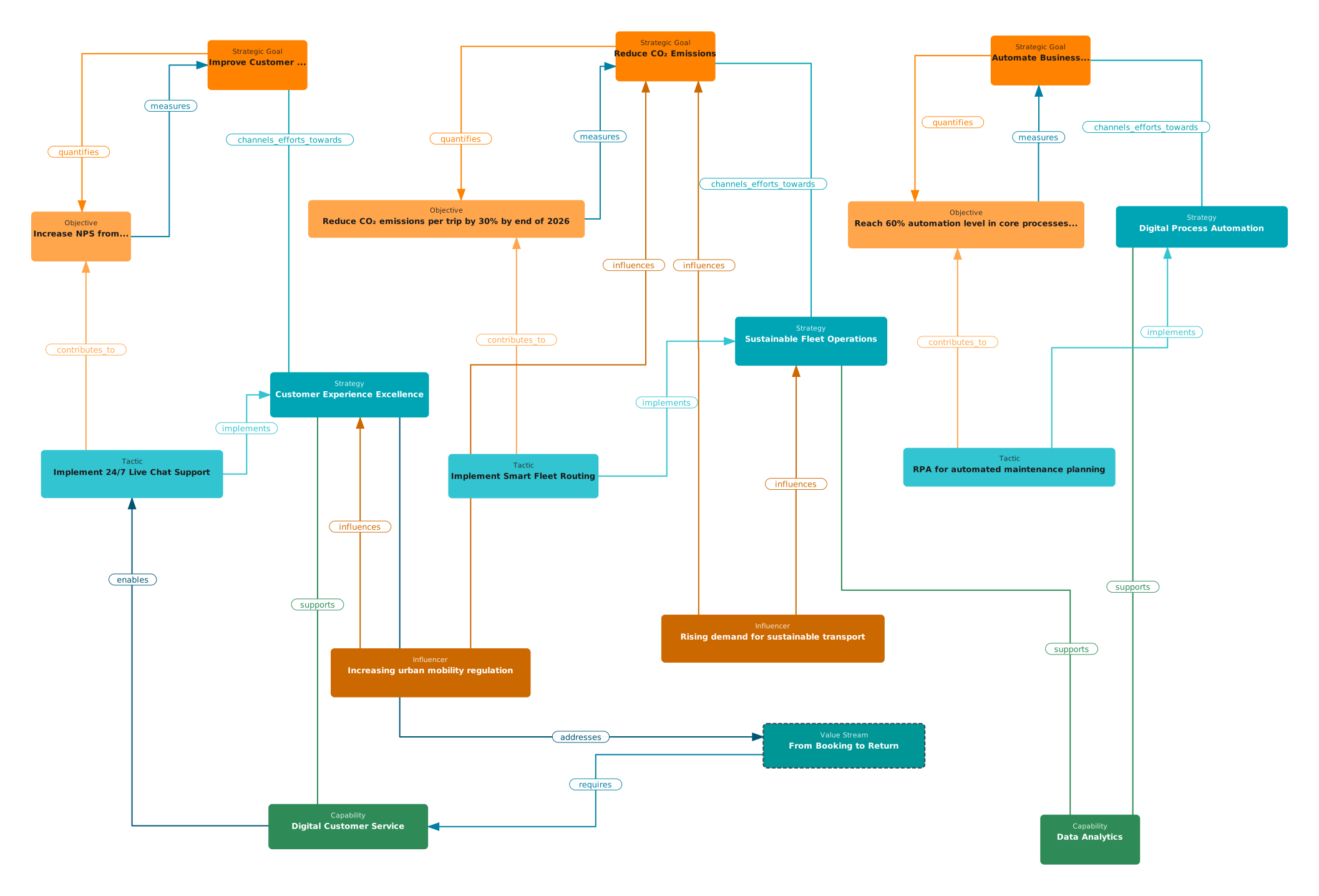
The power of this structure is full traceability in both directions. From a Tactic, you can follow the chain upward to the Strategy, the Strategic Goal, and the Vision. From a Capability, you can follow it forward to the Strategy it supports and the Value Stream that requires it. Nothing floats in isolation.
What makes this particularly powerful on Metapad is the AI assistant. Once the strategy framework is populated with your organization's constructs and relationships, the AI can answer questions directly from the model — navigating the knowledge graph, analyzing gaps and surfacing insights that would otherwise require hours of manual review.
Ask it "Which capabilities are we missing to execute our sustainability strategy?" and it does not just answer the question — it performs a full capability gap analysis: identifying which capabilities are currently linked to the strategy, which are missing based on the strategy description, and which tactics are left without a capability architecture to support them.
Strategy becomes not just a diagram but a navigable knowledge graph that the entire organization can interact with — and that gets smarter the more completely it is modeled.
A concrete example: Carsharing
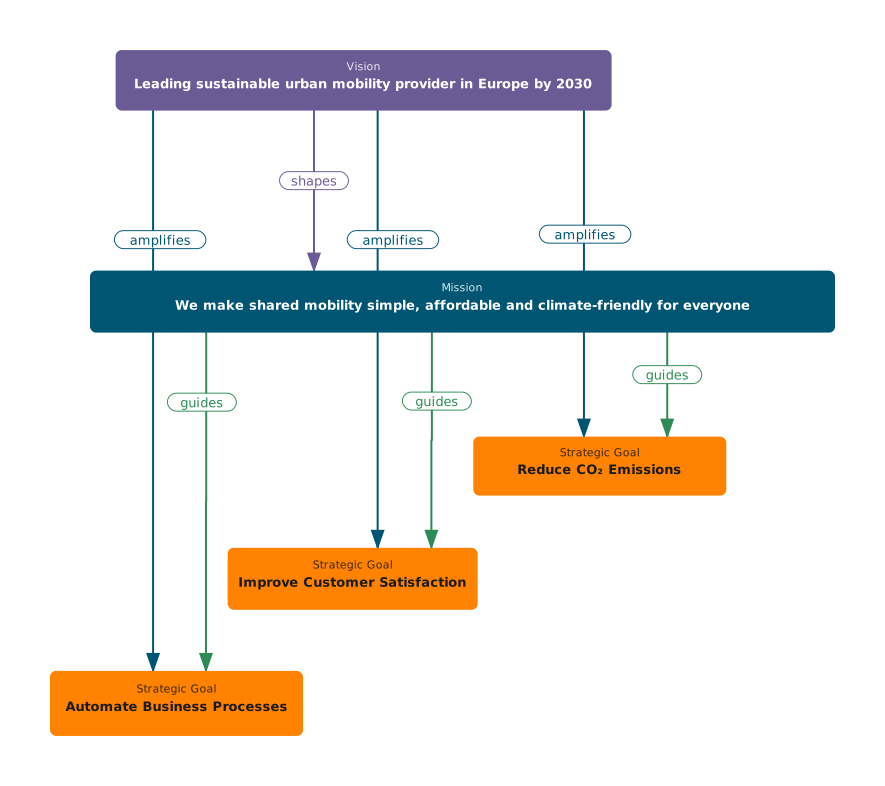
To make the model tangible, we built a full example around a carsharing company — a context where sustainability, customer experience and operational efficiency all compete for strategic attention simultaneously.The company's Vision: "Leading sustainable urban mobility provider in Europe by 2030." Its Mission: "We make shared mobility simple, affordable and climate-friendly for everyone."The Direction Overview shows the top of the model — the starting point of every strategic conversation. Vision and Mission sit at the top, connected through the shapes relationship: the Vision defines the aspirational future state, the Mission translates it into the organization's daily purpose. From there, the Vision amplifies and the Mission guides each of the three Strategic Goals — making explicit that every goal must be justified by both where the organization wants to go and why it exists.
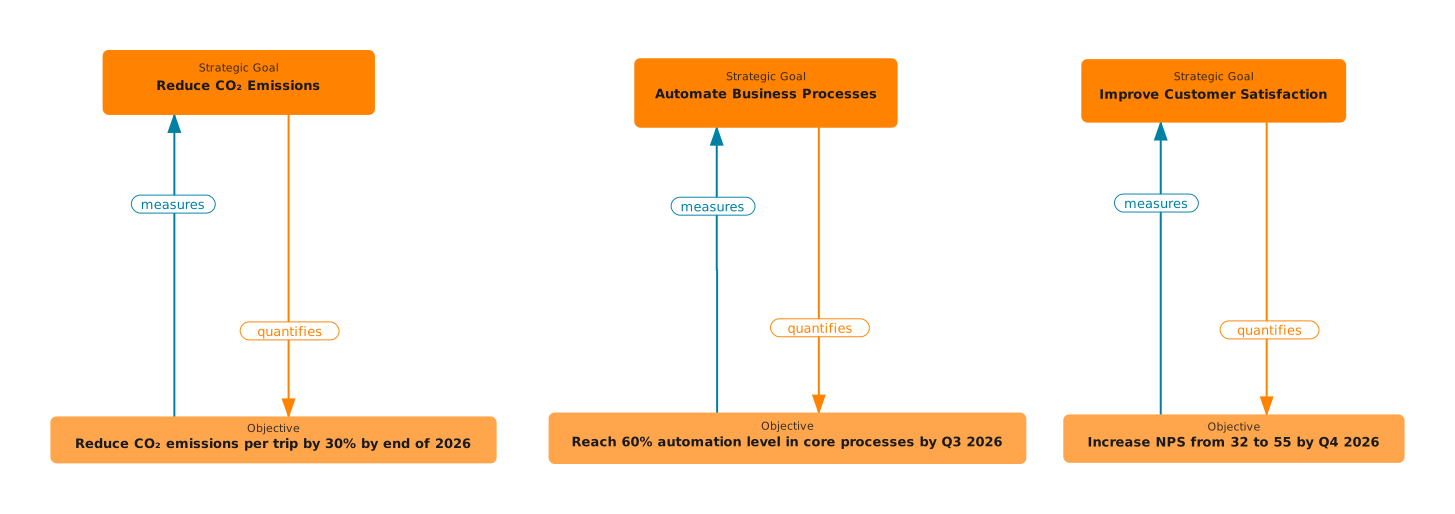
The Goals & Objectives view makes the OKR logic visible. Each Strategic Goal is connected to exactly one Objective through the quantifies relationship — the Goal describes the desired state qualitatively, the Objective makes it concrete with a number, a baseline and a deadline. The feedback loop runs in both directions: the Objective also measures the Strategic Goal, closing the cycle between ambition and accountability.
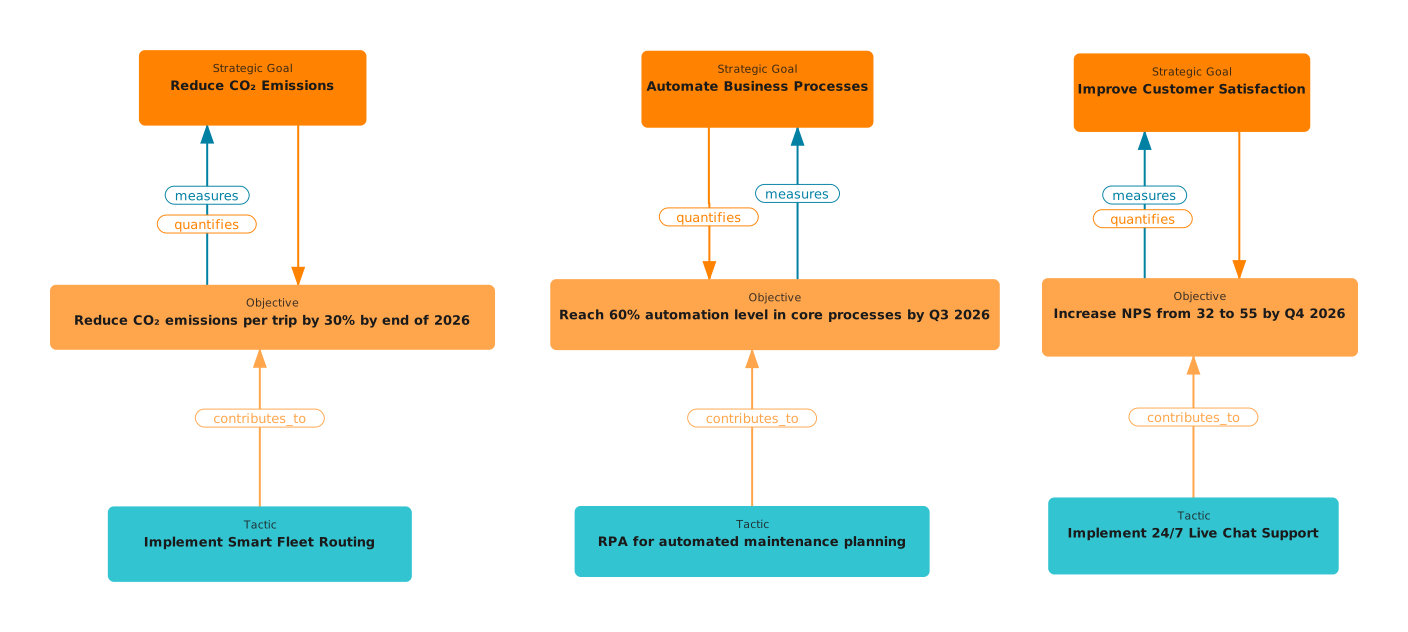
The Goal Breakdown view extends the picture one level further — from Strategic Goals and Objectives all the way down to the Tactics that drive them. Each Tactic contributes_to an Objective, making the full chain from qualitative ambition to concrete action visible in one diagram. This is where strategy meets execution: a team executing a Tactic can see exactly which Objective they are moving and which Strategic Goal that Objective serves.
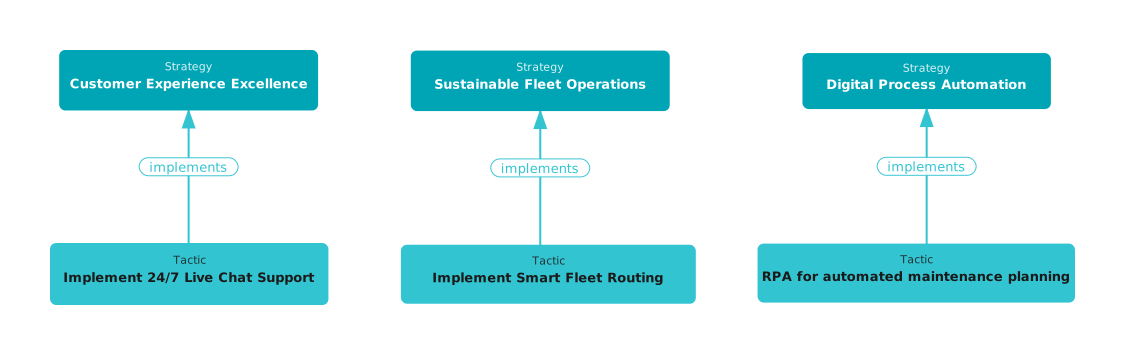
The Execution Plan shows the Execution Layer in full. Each Strategy defines a fundamental course of action — Customer Experience Excellence, Sustainable Fleet Operations, Digital Process Automation — and is connected to the Strategic Goal it serves through channels_efforts_towards. Each Tactic implements a Strategy, translating the high-level direction into a concrete initiative. The distinction between Strategy and Tactic is deliberate: a Strategy lives for years and sets direction, a Tactic lives for weeks or months and delivers results.
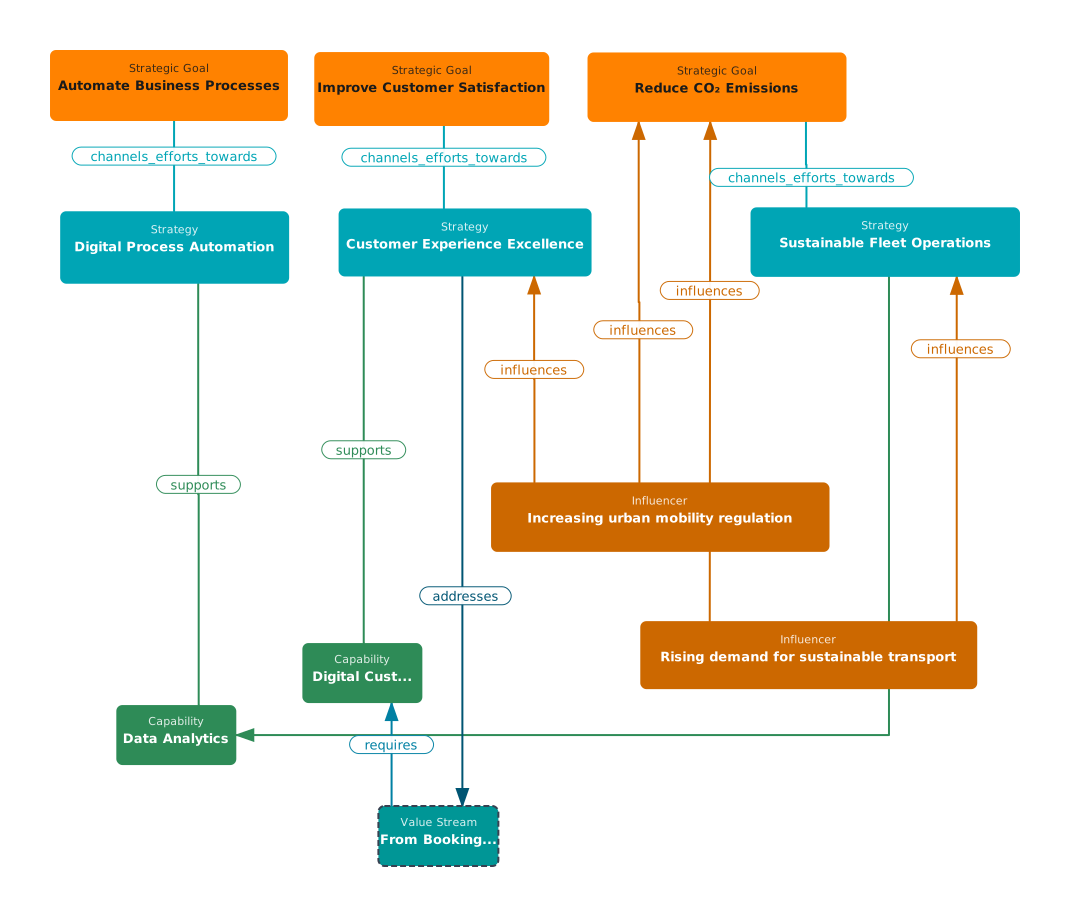
The Influencer Map shows the Enablement Layer — the forces and capabilities that shape and enable strategy. The two Influencers each influence specific Strategic Goals and Strategies, making the strategic context explicit. The two Capabilities support the Strategies that depend on them and enable the Tactics that require them. The Value Stream "From Booking to Return" sits at the bottom as an optional bridging construct — addressed by the Customer Experience Excellence strategy and requiring the Digital Customer Service capability to function.
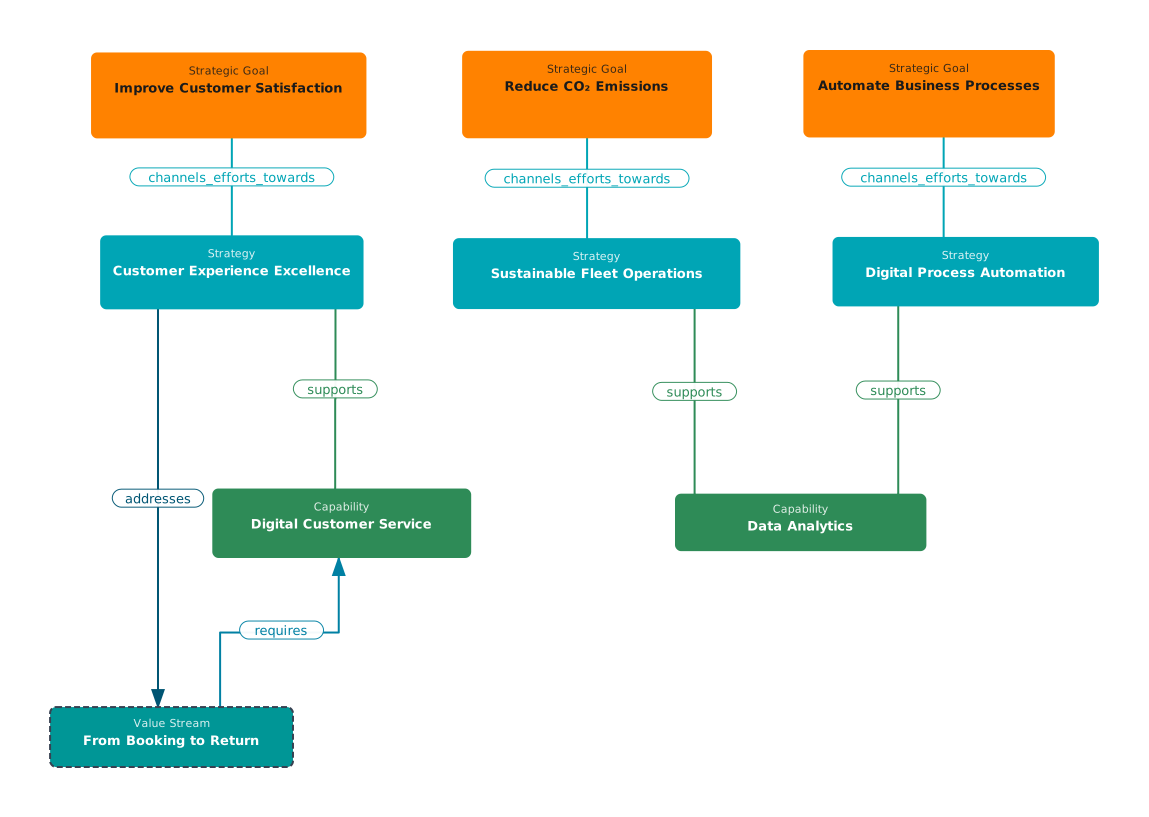
The Goals × Capabilities view provides a quick alignment check across the full model — showing which Strategies serve which Strategic Goals and which Capabilities support which Strategies. Gaps show up immediately: a Strategic Goal with no supporting Strategy, or a Strategy with no available Capability, becomes visible before it becomes an execution problem.
The Big Picture view shows the complete model at once — all 19 constructs, all relationships, all three layers in a single diagram. This is the view for leadership conversations: one knowledge graph that holds the entire strategic picture of the organization, traceable in every direction.
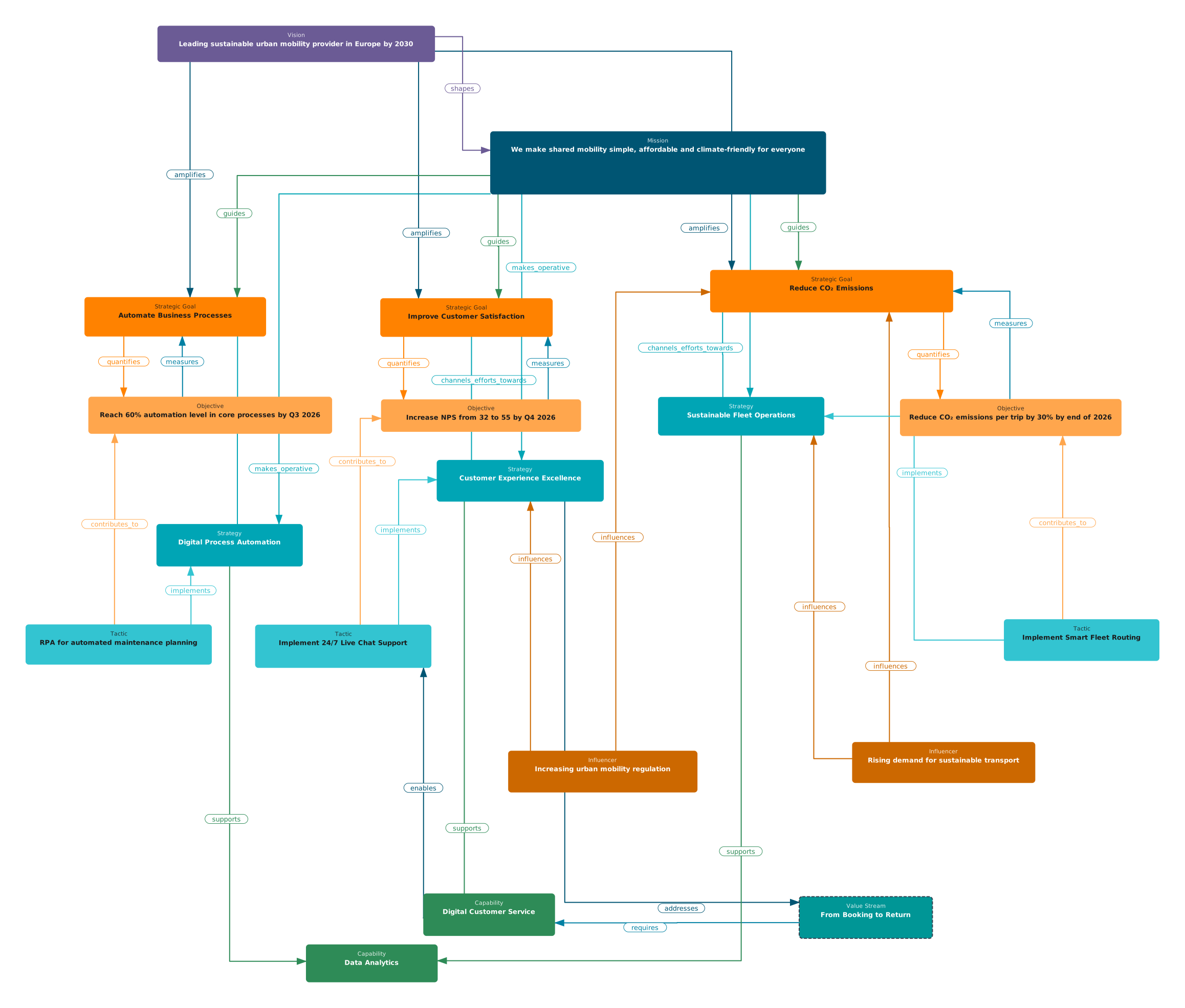
The full model is available as a template in the Metapad library. You can explore it, adapt it to your own context, and use the AI assistant to populate it with your organization's strategy.
What a Strategy Mapping Exercise Actually Changes
A strategy framework does not replace strategic thinking. It structures it — and that distinction matters more than it might seem.
The research is clear: strategies fail not because of bad ideas but because of coordination breakdowns — the invisible gaps between what leadership intends and what teams actually do. A structured model addresses this directly by making three things explicit that usually remain implicit.
But there is something equally important that the numbers and diagrams do not capture: the value of building the model collaboratively. The conversations that happen while mapping a strategy — deciding which goals matter, which capabilities are missing, which influencers are being ignored — are often worth as much as the model itself. Strategy mapping is not just a documentation exercise. It is a coordination exercise. As Dwight D. Eisenhower put it: "Plans are worthless, but planning is everything."
When the connections between Vision, Goals, Strategies, Tactics and Capabilities are explicit and navigable, three things change in practice.
Accountability becomes clearer. Every tactic has a strategy behind it. Every strategy has a goal it serves. Every goal has an objective that measures it. There are no orphaned initiatives and no unmeasured ambitions.
Gaps become visible before they become problems. A Strategic Goal with no supporting Strategy, or a Strategy with no available Capability, shows up immediately in the model — before it becomes an execution failure six months later.
Reviews become more focused. Instead of revisiting the entire strategy from scratch in every planning cycle, teams can navigate the model and ask a precise question: where exactly has something changed, and what does that change affect downstream?
The $60 billion spent annually on strategic planning will not deliver better results through more planning. It will deliver better results when strategy becomes a shared, navigable knowledge graph — visible to everyone, traceable in every direction, and connected from vision all the way to the capabilities needed to execute it. That is what strategy mapping makes possible.
Sources:

Services
Resources
All Rights Reserved.