
S&OP is Not a Silo: How Sales & Operations Planning Fits Into the Value Streams of the Supply Chain
How the supply chain breaks down into three value streams and why S&OP is the highest-leverage point in the entire chain

Sebastian Bitter
22.6.2026
A supply chain can be broken down into value streams: Sense-to-Plan, Plan-to-Produce and Order-to-Cash. The S&OP process is part of the first value stream. It is not an add-on layered on top of the chain. A planning error in S2P propagates through the entire chain: from procurement to production to delivery performance. The chain is not a one-way street. Actuals from production and sales flow back into the next S&OP cycle.
From Process to Big Picture
In Part 1 we introduced S&OP as a planning process: five reviews, a monthly cycle, an approved plan at the end. In Part 2 we saw what happens when that process is missing and disruptions hit an unprepared organisation.
The focus was inward: How does the S&OP cycle work? Which roles are involved? Which decisions are made? In this post we widen the lens. We look at suppliers, production, warehousing and customer delivery, connecting the dots to the ElbeBräu Supply Chain Model.
Because an approved plan alone does not ship a single can of beer. The plan needs to be produced, stored, shipped and invoiced. And that raises the question: Where does S&OP actually sit in the bigger picture of the supply chain?
The answer starts with an observation: A supply chain is too large to grasp all at once. From raw materials to payment receipt, numerous steps and departments are involved and the dependencies between them are rarely documented. The solution: Break the chain into manageable segments called value streams. Each value stream starts with a clear trigger and ends with a measurable outcome. Together they cover the entire value creation.
For the ElbeBräu Hamburg supply chain we use three value streams. The model is deliberately simplified: it shows the essential stages and handoffs, not every detail. That is precisely what makes the connections visible that often get lost in day-to-day complexity.
Sense-to-Plan (S2P) covers everything related to planning. The S&OP process we introduced in the previous posts can also be described as the Sense-to-Plan value stream: from gathering relevant market data to the approved S&OP plan.
Plan-to-Produce (P2P) translates the plan into physical reality. From production planning through procurement to the finished product in the warehouse.
Order-to-Cash (O2C) gets the product to the customer and the money back into the business. From customer order to payment reconciliation.
The logic is simple: first plan, then produce, then deliver and settle. The value streams interlock and together form an end-to-end chain.
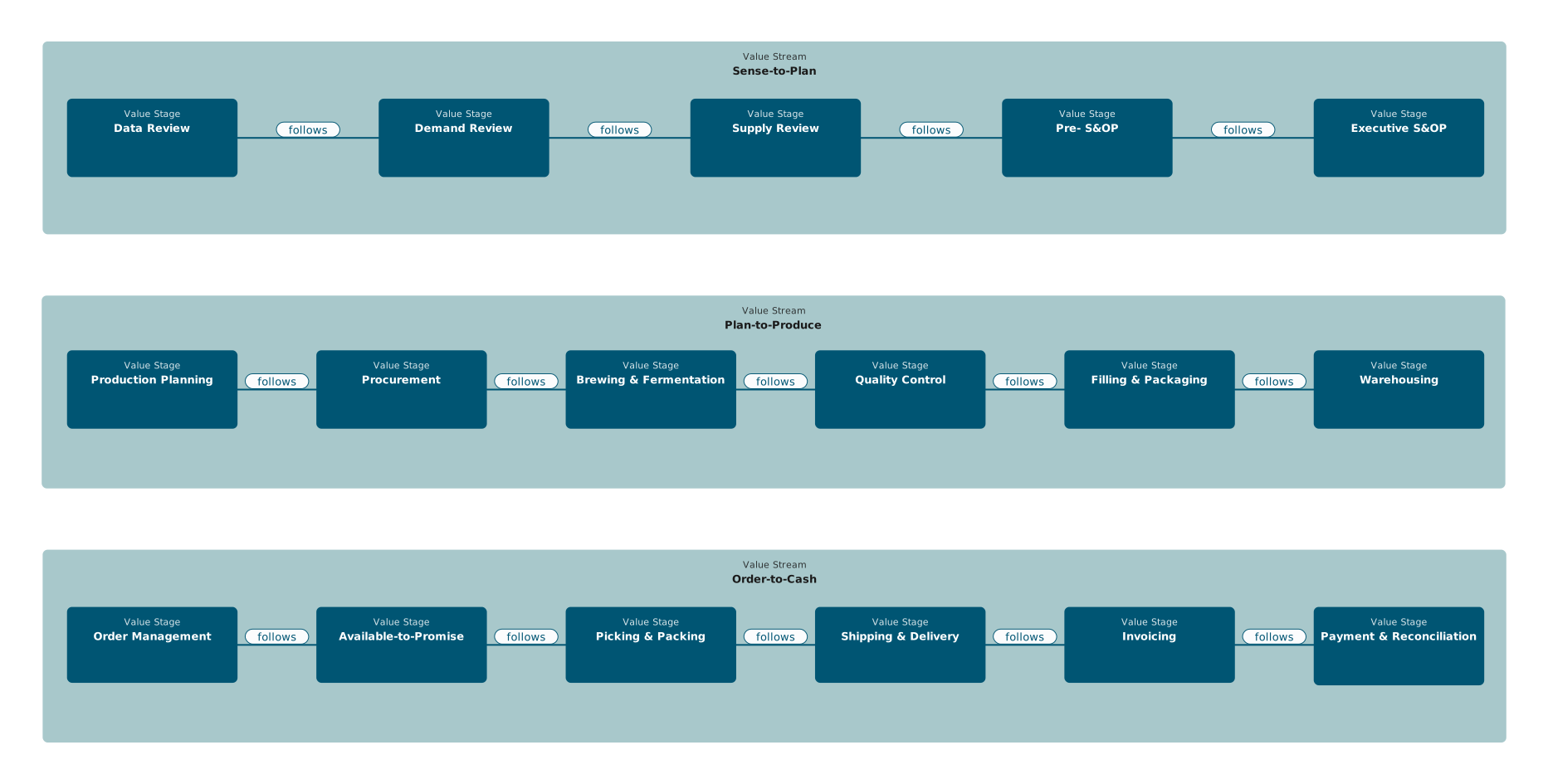
The three value streams of the ElbeBräu supply chain: Sense-to-Plan, Plan-to-Produce and Order-to-Cash. Each value stream consists of sequential stages. (Explore the model)
What many overlook: S&OP is part of the first value stream from the start. It is not a process layered on top of these streams. And from there it influences everything that follows. Let us look at the three value streams in detail.
Sense-to-Plan: The S&OP Process as a Value Stream
Anyone who has read the first two posts already knows this value stream. The five stages of Sense-to-Plan correspond to the five S&OP reviews we described there in detail.
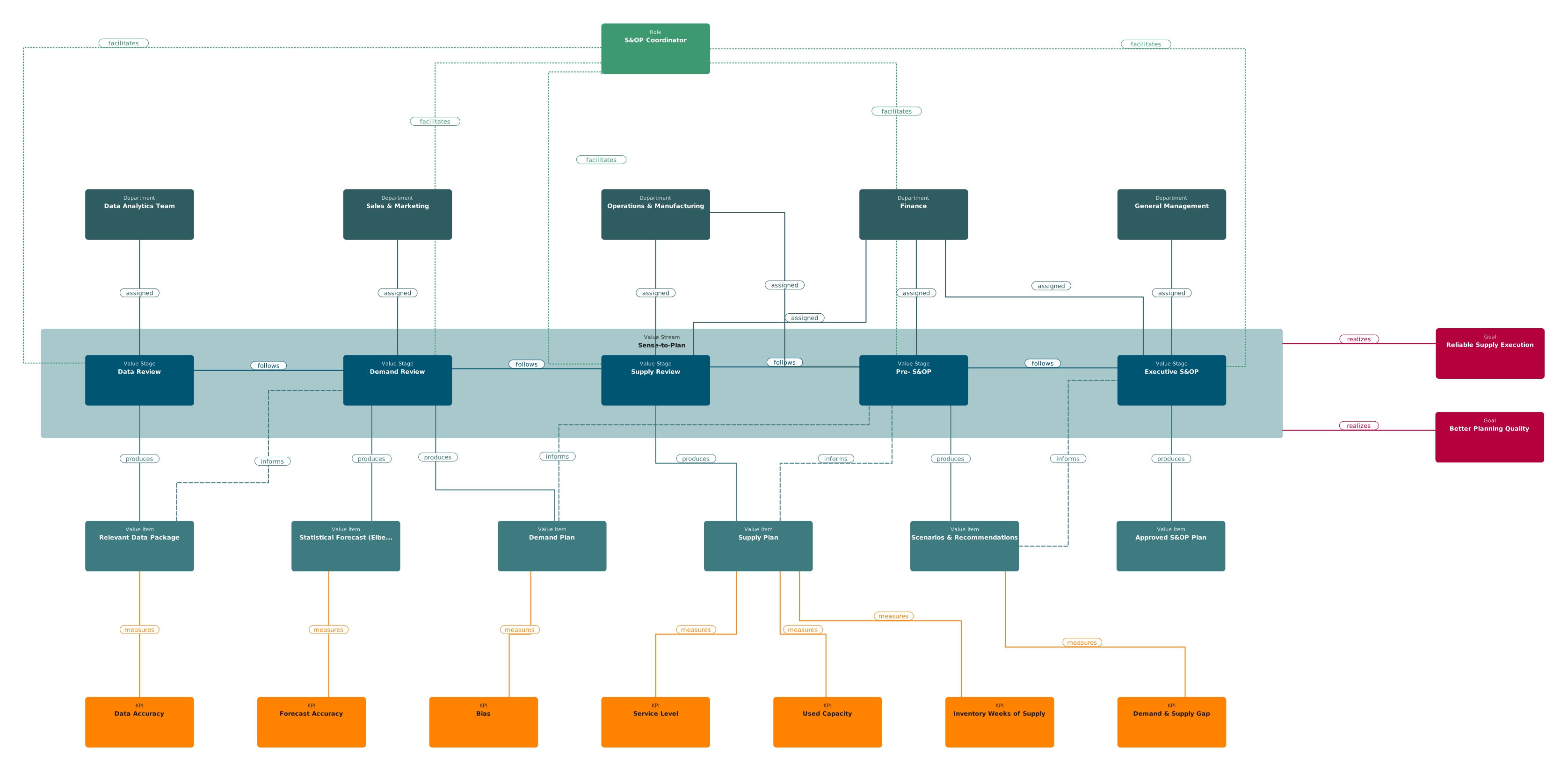
The Sense-to-Plan value stream with its five stages. (Explore the model)
Data Review, Demand Review, Supply Review, Pre-S&OP and Executive S&OP. Each stage has a clear owner, produces a concrete output and is measured against defined KPIs.
The starting point is the Data Review, where the Data Analytics team collects and prepares relevant market data. This data does not come from nowhere: actual sales figures from the commercial team, production metrics from manufacturing, delivery rates from logistics. The S&OP process therefore begins with the results of the other value streams. At the end stands the Approved S&OP Plan from the Executive S&OP: the binding agreement on what ElbeBräu will produce, procure and deliver in the next cycle.
What matters is what happens next. The approved plan is not yet a result. It is the starting signal for execution.
Plan-to-Produce: From Plan to Pallet
The approved S&OP plan states what needs to be produced. Plan-to-Produce makes it happen. Here we leave the planning level and enter the physical world: raw materials are ordered, beer is brewed, cans are filled.
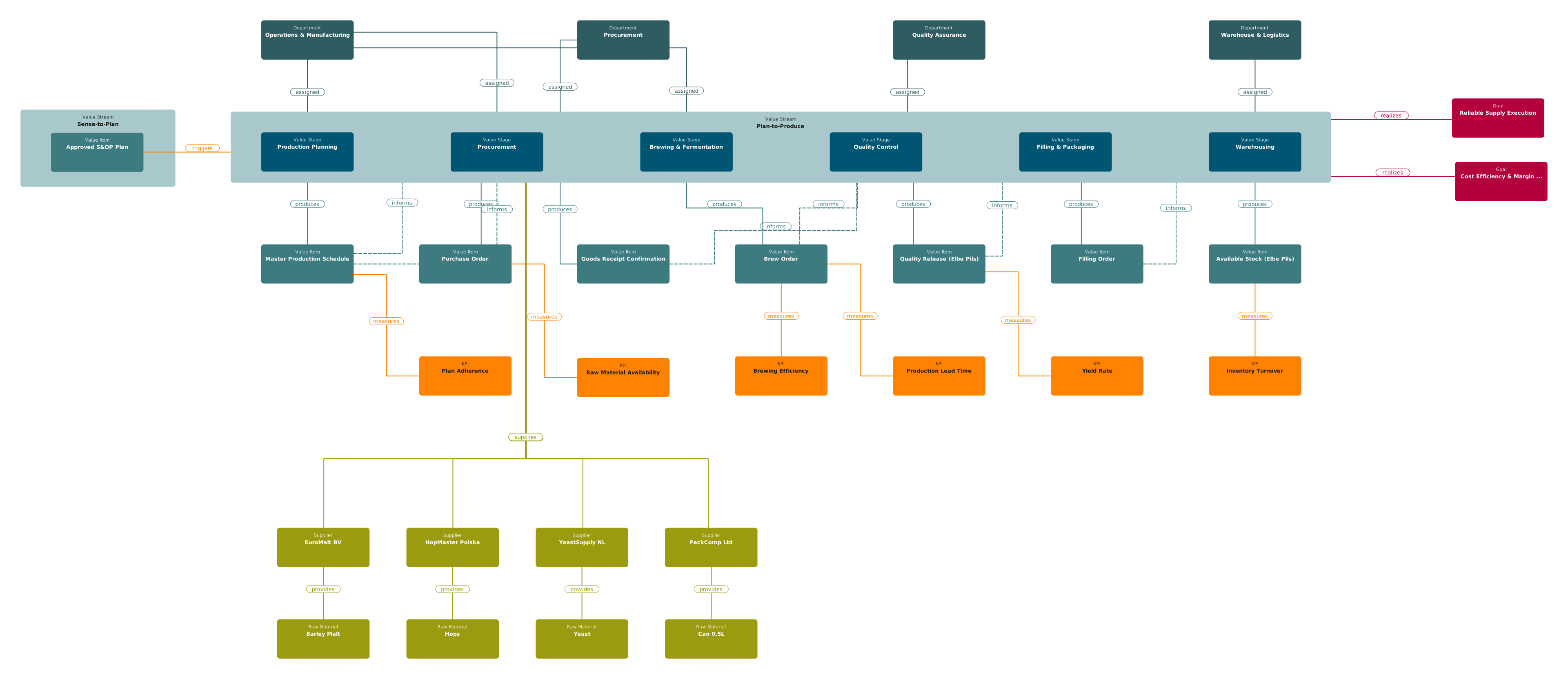
The Plan-to-Produce value stream: from production planning to the finished product in the warehouse. (Explore the model)
Production Planning translates the S&OP plan into a concrete production schedule. Which batches of Elbe Pils run in which week? Which capacities are blocked? The result is a Master Production Schedule that sets the pace for all subsequent steps.
Procurement secures the required raw materials. Barley malt from EuroMalt BV, hops from HopMaster Polska, yeast from YeastSupply NL. This is where purchase orders are placed and meeting delivery dates becomes critical. A delayed malt shipment can jeopardise the entire production schedule.
Brewing & Fermentation is the heart of the brewery. Mashing, lautering, boiling, fermenting. This step takes several weeks for Elbe Pils and largely determines the lead time. The brew order documents what is being brewed.
Quality Control checks whether the product meets standards. Taste, purity, shelf life. Only after the quality release may a batch move on to the next stage.
Filling & Packaging fills the beer into cans and packages it ready for shipping. The filling order controls this step.
Warehousing receives the finished goods and makes them available. This is where Plan-to-Produce ends. The product is physically present and ready for dispatch. The available stock is also the handoff to the next value stream: only when goods are in the warehouse can a customer order be fulfilled.
Order-to-Cash: From Order to Payment
When NordGetränke GmbH places an order for 500 pallets of Elbe Pils, Order-to-Cash begins. In the case of ElbeBräu the chain operates on a push principle: the brewery produces to stock based on the S&OP plan and the customer orders from available inventory.
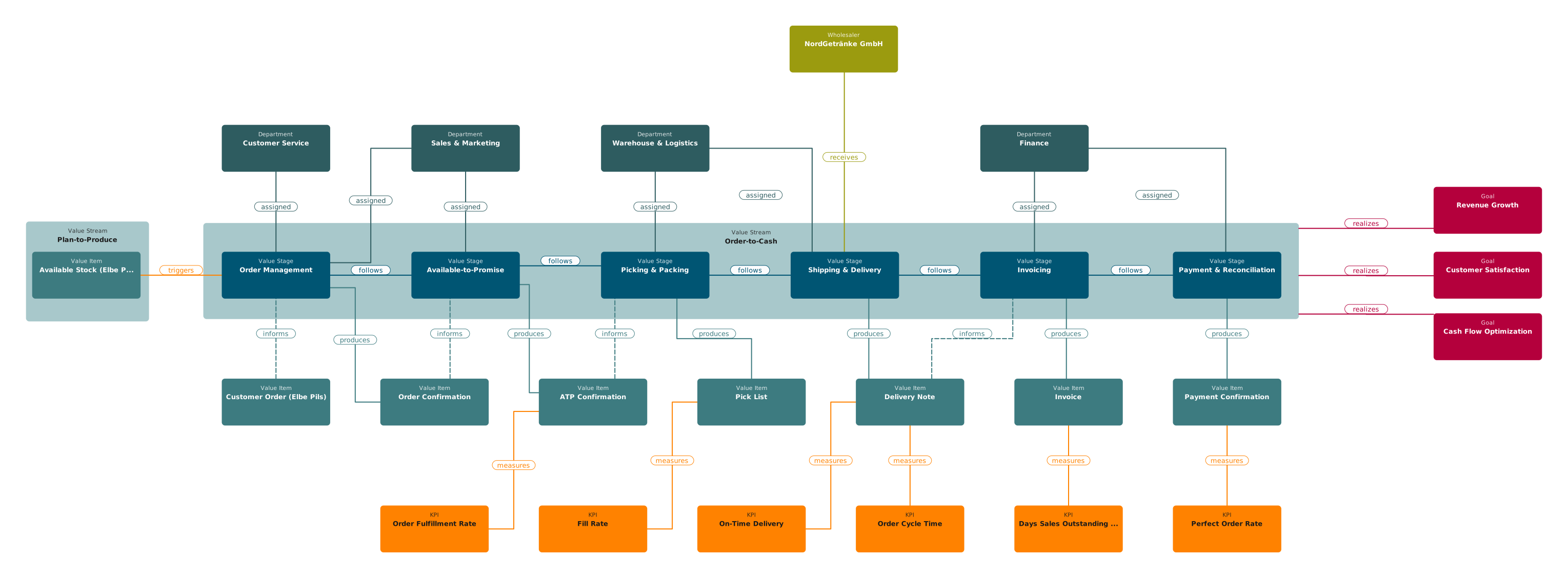
The Order-to-Cash value stream: from customer order to payment reconciliation. (Explore the model)
Order Management receives the order and records it in the system. The customer order is the formal starting point.
Available-to-Promise (ATP) checks whether the order can be fulfilled from existing stock. Are 500 pallets of Elbe Pils in the warehouse? When can they be delivered? The order confirmation is the binding commitment to the customer. This is where the direct link to Plan-to-Produce becomes visible: only what has been reported as available in warehousing can be promised here.
Picking & Packing assembles the order in the warehouse and prepares it for dispatch. The pick list controls this process.
Shipping & Delivery gets the goods to the customer. The delivery note documents the handover. On-time delivery measures whether ElbeBräu keeps its promises.
Invoicing generates the invoice based on the delivered goods.
Payment & Reconciliation closes the loop. Payment is received, reconciled and the transaction is complete. Days Sales Outstanding shows how long it takes from invoice to payment receipt.
The Big Picture: An End-to-End Chain
When you zoom out, the connections between the three value streams become visible.

The end-to-end process view: all three value streams with their stages and outputs. The Approved S&OP Plan (top left) triggers Plan-to-Produce. The Available Stock (top right) triggers Order-to-Cash. (Explore the model)
Each stage produces a concrete output. Each output informs or triggers the next step. The Approved S&OP Plan from Sense-to-Plan is the direct input for Production Planning in Plan-to-Produce. The Available Stock from Warehousing triggers order fulfilment in Order-to-Cash.
This is not abstract theory. It is the operational reality of every manufacturing supply chain. The only question is whether these connections are explicitly documented and managed or whether they remain implicit and invisible.
For ElbeBräu Hamburg we have mapped these connections in a navigable model. Every value stream, every stage, every output and every KPI is documented and linked. The model shows what happens, why it happens and who is responsible.
The complete Supply Chain Value Stream Model can be explored in the Metapad Model Library.
Why S&OP is the Most Critical Point in the Entire Chain
Looking at this end-to-end view, one thing stands out: Sense-to-Plan is the only stream that produces no physical output. No beer flows, nothing is loaded onto trucks. The output is a plan. But that plan determines everything that follows.
An overly optimistic forecast in the Demand Review leads to procurement ordering too much, the brewery blocking capacity and warehousing costs that nobody budgeted for. An overly conservative forecast means NordGetränke GmbH goes empty-handed, on-time delivery collapses and in the worst case the customer walks away.
The impact chain runs through the entire supply chain:
Forecast Accuracy (S2P) determines Plan Adherence (P2P) and Plan Adherence determines On-Time Delivery (O2C). These are not three isolated KPIs in three separate departments. This is a causal chain. Improve forecast accuracy by 10% and you will see the effect in delivery performance months later.
The same applies to the inventory chain: Inventory Weeks of Supply (S2P) influences Inventory Turnover (P2P), which in turn determines the Order Fulfillment Rate (O2C). Plan too much and you tie up capital. Plan too little and you lose revenue.
This is exactly why S&OP is the lever with the greatest reach across all downstream chains. A well-functioning S&OP process improves not just planning. It improves procurement, production, delivery and liquidity. And a poorly functioning S&OP process damages all of them equally.
The impact is not a one-way street. The S&OP process does not just influence downstream value streams. It is also fed by them. Actual production figures from Plan-to-Produce, real sales data and delivery rates from Order-to-Cash: all of this flows back into the Data Review of the next S&OP cycle. How accurate was the forecast? Where were the deviations? What changed in the market? Without this feedback loop, S&OP plans in a vacuum. With it, a linear chain becomes a learning cycle.
What Comes Next
We have now explored the three value streams of the ElbeBräu supply chain and understood why S&OP is the pivotal point. But there is one question we have left open: who actually works in these value streams? Which departments own which stages and what happens when Finance, Operations or Sales is laid across all three streams? That is what the next post is about.
Further Reading: - Try the Interactive S&OP Model - Explore the Supply Chain Model - Play the Beer Distribution
Services
Resources
All Rights Reserved.